The 20 Best AI Content Detectors in 2025: Accuracy, Features, and Compliance


The rise of large language models (LLMs) like GPT-4, Claude 3, and Google Gemini has blurred the line between human and machine creativity. In 2025, detecting AI-generated text isn't just about academic integrity; it’s a critical component of content strategy, SEO compliance, and brand reputation management. As detection models become increasingly sophisticated—moving beyond simple perplexity and burstiness metrics to deep structural analysis—the tools needed to verify originality must be equally advanced. Whether you are a university professor enforcing originality, an SEO agency protecting clients from algorithmic penalties, or a content writer ensuring their voice remains authentic, selecting the right AI detector is paramount. The stakes are higher than ever, demanding tools with low false-positive rates and comprehensive feature sets that address the full content creation lifecycle. The focus has shifted from mere detection to integrated solutions that can both verify origin and remediate problematic content.
Quick Look: The Industry Leaders
The landscape of AI detection is dominated by tools focusing on accuracy, compliance, and integrated rewriting capabilities. Here are the 20 essential platforms covered in this definitive guide:
All-in-One Suites: GPT0, Walter Writes AI Detector
Maximum Accuracy & SEO: Winston AI, Originality.AI, Copyleaks AI Detector
Academic Standards: GPTZero, Proofademic AI, Turnitin AI Detection, Unicheck AI
Integrated & Budget-Friendly: Grammarly AI Checker, ZeroGPT, Quetext, Quillbot AI Checker
Enterprise & Specialized: Content at Scale, Writer.com, Undetectable.ai, AI Code Checker, Smodin AI, Writefull AI, Content Forge AI
Quick Comparison: The Top AI Content Detectors in 2025
| Tool Name | Best For | Free Plan/Trial | Starting Price |
|---|---|---|---|
| 1. GPT0 | Full-Suite Content Authenticity & Humanization Workflow | Yes (Free Tier Available) | Varies (Paid Plans Available) |
| 2. Winston AI | Educators and SEO Writers Requiring Maximum Accuracy | Yes (Free Trial/Checks) | $12/month |
| 3. Originality.AI | SEO Agencies & Large-Scale Content Audits | No Free Plan | $20/month (Estimated Start) |
| 4. Copyleaks AI Detector | Integrated Academic Checks & Compliance-Critical Content | Yes (Free Trial/Checks) | $12/month |
| 5. GPTZero | K-12 Education, Students, and Essay Verification | Yes (Free Version Available) | $10/month |
| 6. Proofademic AI | High-Stakes Academic and Formal Writing | Limited Free Checks | $15/month |
| 7. Walter Writes AI | Detection and Instant Humanization/Rewriting | No | $9.99/month |
| 8. Turnitin AI Detection | The Global Standard for University Coursework | No (Institution Access Only) | Institutional Pricing |
| 9. Grammarly AI Checker | Everyday Writing and Integrated Grammar Checks | Yes (Free Basic Version) | $12/month (Premium) |
| 10. ZeroGPT | Budget-Friendly Option for Students and Independent Bloggers | Yes (Completely Free) | Free |
| 11. Content at Scale AI Detector | SEO Blog Posts, Affiliate Content, and Marketing Audits | Yes (Free Basic Use) | $39/month (Content Generation Suite) |
| 12. Quetext | Integrated Plagiarism & AI Checks for Bloggers and Students | Limited Free Checks | $8.25/month |
| 13. Quillbot AI Checker | Identifying Lightly Paraphrased AI Text and Casual Use | Yes (Free Version) | $8.33/month (Premium) |
| 14. Writer.com AI Detector | Enterprise Content Teams and Brand Compliance Review | Yes (Free Detection Tool) | $18/month (Team Plan) |
| 15. Undetectable.ai Detector | Content Transformation Workflows and Pre-Rewrite Scans | No | $15/month |
| 16. AI Code Checker | Developers and Engineering Teams (Code Integrity) | Limited Free Checks | $19/month |
| 17. Smodin AI Detection | Comprehensive Text Verification and Rewriting | Yes (Free Tier Available) | $10/month |
| 18. Writefull AI Detector | Scientific and Technical Documentation | Limited Free Checks | $7/month (Premium) |
| 19. Content Forge AI | Deepfake Text and Multi-Media Transcript Verification | No | $49/month (Enterprise Focus) |
| 20. Unicheck AI | Institutional Compliance (Alternative to Turnitin) | No (Institution Access Only) | Institutional Pricing |
The 20 Best AI Content Detectors in 2025
1. GPT0
Best For: Full-Suite Content Authenticity & Humanization Workflow.

GPT0 has rapidly gained attention by offering a robust, all-in-one solution that recognizes the modern reality of content creation: AI usage is inevitable, but authenticity must be maintained. Claiming an impressive 99.7% detection accuracy across models like ChatGPT, GPT-4, Claude, and Gemini, GPT0 provides high confidence scoring. Its key differentiator is the integrated "AI Humanizer" tool, which allows users to take flagged AI content and instantly re-process it to increase perplexity and burstiness, effectively making the text undetectable by standard checkers while retaining the core meaning. This functionality makes it indispensable for professional writers and content agencies working on tight deadlines who need to ensure their final output is Google-friendly and original.
Beyond detection and humanization, the platform includes a full suite of writing tools such as advanced paraphrasing, summarizing, and a grammar checker. This positions GPT0 not merely as a checker but as a complete workflow manager for maintaining high standards of quality and originality. The clear confidence scoring helps users quickly identify risky sections, streamlining the editing process. Using a tool like GPT0 allows teams to maintain speed without sacrificing the critical human element that modern algorithms demand.
Pros & Cons
Pros:
Extremely high claimed accuracy (99.7%).
Integrated AI Humanizer to fix flagged content instantly.
All-in-one suite (detector, paraphraser, summarizer).
Clear, segmented confidence scoring for easy editing.
Supports detection of modern LLMs (GPT-4, Gemini).
Cons:
Requires detailed usage to fully leverage the humanization features.
Paid plan details are usage-dependent and may require research.
Newer tool compared to market veterans like Turnitin.
Pricing
Free Plan: Yes, offers a functional free tier with limited word count or features.
Paid Plan: Varies based on usage volume and access to the full writing suite (including the Humanizer). Pricing is competitive for enterprise users.
2. Winston AI
Best For: Educators and SEO Writers Requiring Maximum Accuracy and Content Certification.
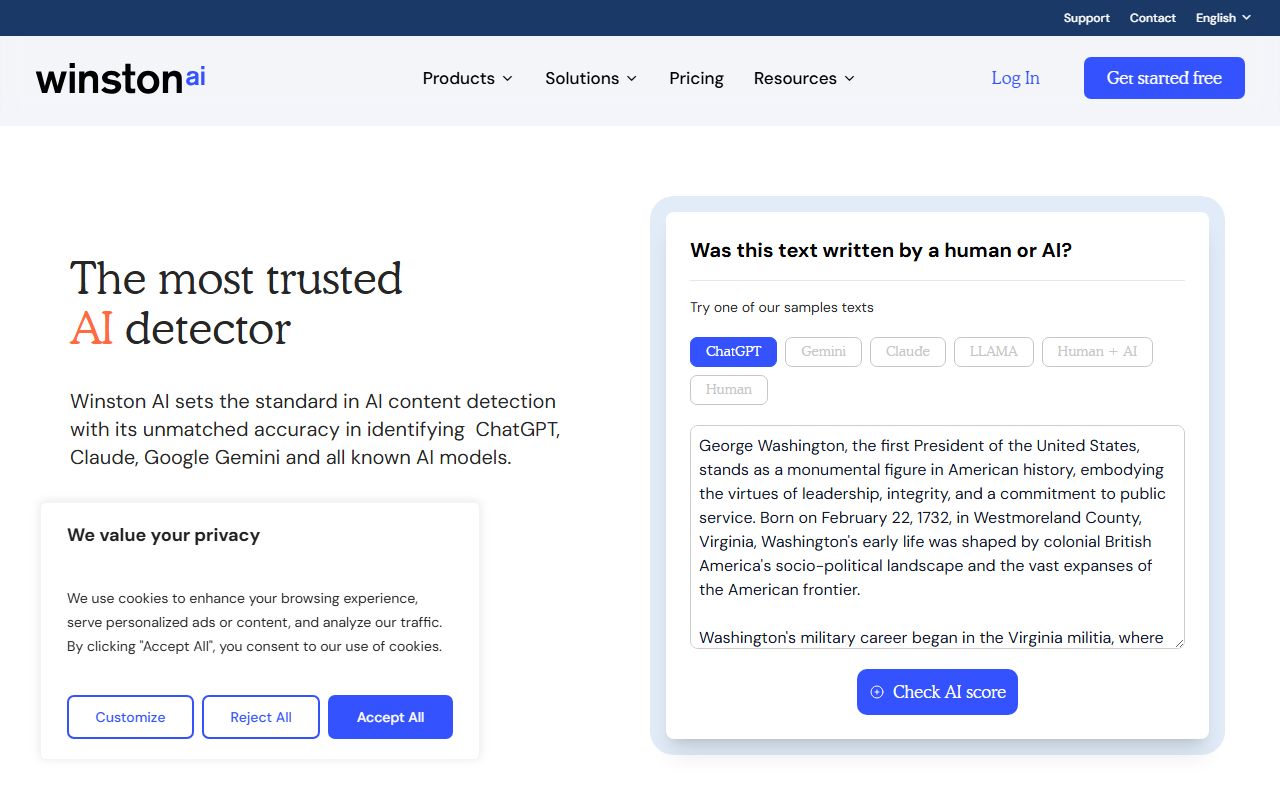
Winston AI sets the industry benchmark for detection accuracy, claiming an exceptional 99.98% rate in controlled testing environments. This makes it the go-to choice for high-stakes contexts, particularly in academia and SEO publishing where integrity is everything. The platform is designed for reliability, offering robust plagiarism detection alongside its AI checks, ensuring comprehensive originality verification. A unique feature is the HUMN1 content certification, a visible seal that publishers can use to signal the verified human authorship of their content, a valuable asset in the age of Google’s helpful content systems.
The user interface is intuitive, allowing for quick checks of large documents or even scanned handwritten notes, a benefit for educational institutions. Winston AI’s focus is on minimizing false positives, making it highly trusted when dealing with formal or structured writing styles that often confuse less sophisticated models. By investing in Winston AI, users are buying into reliability, ensuring that crucial reports, dissertations, or high-value pillar content meet the most rigorous standards of authenticity.
Pros & Cons
Pros:
Industry-leading claimed accuracy (99.98%).
Includes robust plagiarism and image detection.
Offers HUMN1 content certification for publication credibility.
Supports document uploads and scanning.
Low false-positive rate on structured human text.
Cons:
Higher starting price compared to entry-level tools ($12/month).
Lacks the integrated "humanizer" features of newer competitors.
Primary focus is on detection, not content refinement.
Pricing
Free Plan: Yes, offers a free trial or limited free checks to test functionality.
Paid Plan: Paid subscriptions start at $12/month, providing a set number of words for checking, increasing with higher tiers.
3. Originality.AI
Best For: SEO Agencies, Web Publishers, and Large-Scale Content Audits.
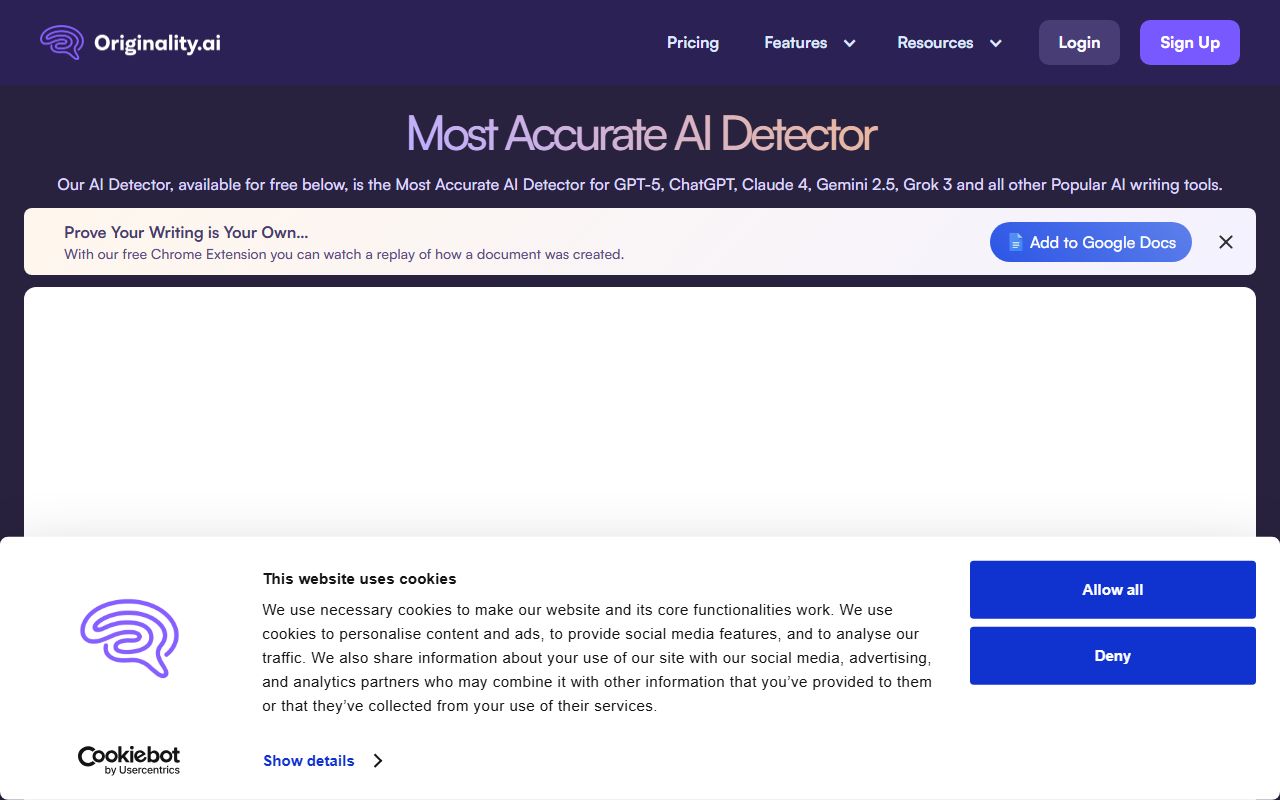
Originality.AI is a cornerstone tool for the content marketing and SEO community, built from the ground up to address the unique challenges faced by web publishers. With a tested accuracy hovering around 96-100%, it is highly respected for its low false-positive rate and effectiveness on long-form content. The platform excels in enterprise use cases, offering API integration, bulk scanning capabilities, and domain scanning to quickly audit large inventories of existing content. This makes it vital for agencies performing site migrations or compliance checks following major Google algorithm updates.
Unlike many competitors focused solely on individual text checks, Originality.AI provides a comprehensive SEO safety net, combining strong AI detection with a robust plagiarism checker specifically optimized for web content. Its usage-based credit model offers flexibility for teams whose checking volume fluctuates monthly. Check out Originality.AI if your primary concern is maintaining the quality and compliance of a high volume of web content.
Pros & Cons
Pros:
Highly trusted by marketers for SEO safety.
Excellent bulk scanning and domain auditing features.
Low false-positive rate for long-form content.
Flexible pay-as-you-go credit system.
Strong API integration for automated workflows.
Cons:
No true free basic version, reliance on credit purchases.
Premium pricing model can become expensive for extremely high volume.
Detection speed can be slightly slower on huge bulk scans.
Pricing
Free Plan: No free plan, but pricing is usage-based via credits.
Paid Plan: Starts with a minimum credit purchase, usually requiring an estimated starting budget of around $20/month for consistent, small-scale usage. Enterprise API usage is priced separately.
4. Copyleaks AI Detector
Best For: Integrated Academic Checks and Compliance-Critical Content.
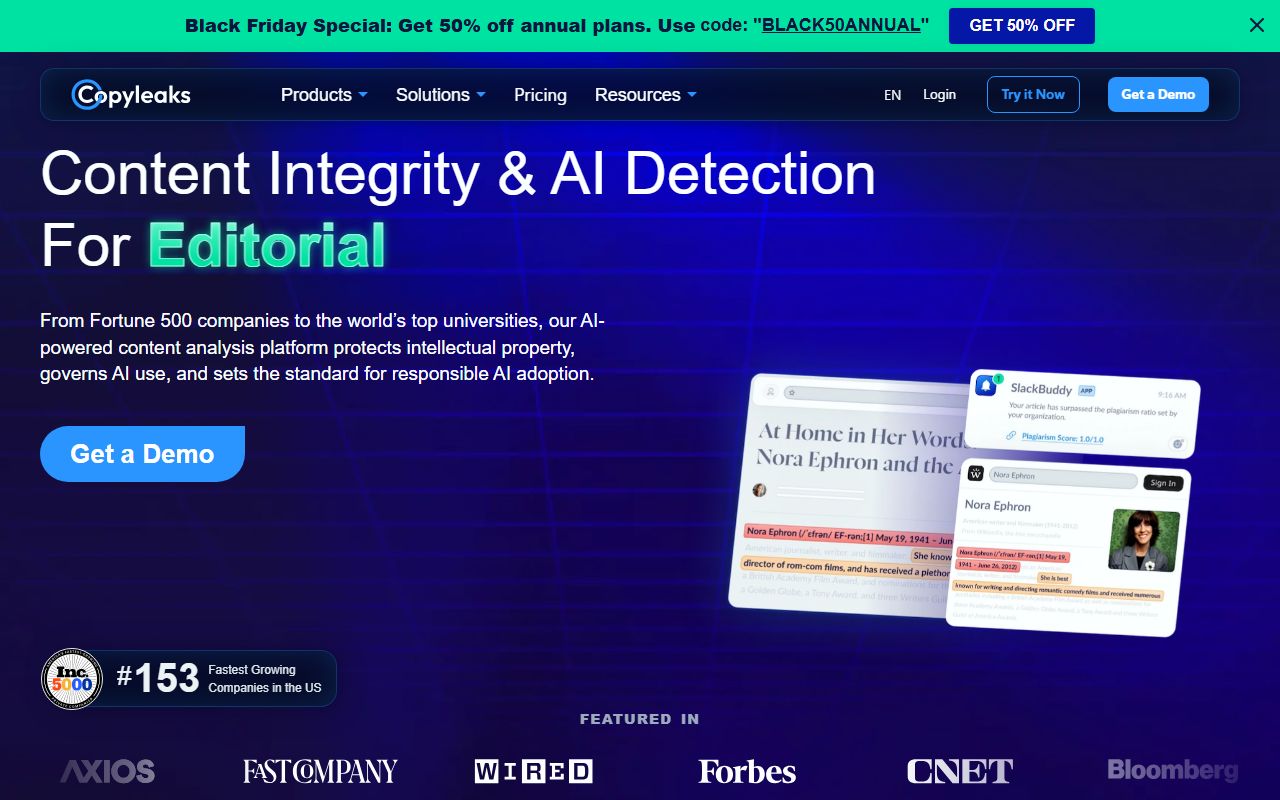
Copyleaks is a veteran in the originality space, offering a powerful AI detection engine with verified accuracy around 98% in professional tests. What sets Copyleaks apart is its comprehensive approach, providing sentence-level analysis that clearly highlights exactly which phrases or paragraphs are likely AI-generated. Crucially, Copyleaks offers deep integration with Learning Management Systems (LMS) used by universities, making it a reliable choice for compliance and high-stakes academic verification.
The tool supports multi-language detection, a vital feature for global institutions and multinational content teams. By combining its detailed AI assessment with its long-established plagiarism checking capabilities, Copyleaks provides a singular, trustworthy report that satisfies legal and academic integrity requirements. Its focus on detailed, granular feedback helps users and instructors understand the source of the score, allowing for more nuanced judgment. Find out more about Copyleaks AI Detector.
Pros & Cons
Pros:
Highly reliable 98% accuracy score.
Detailed, sentence-level scoring provides actionable feedback.
Excellent integration with popular LMS platforms.
Supports detection across multiple languages.
Low false-positive rate on compliance-critical documents.
Cons:
Paid plans start higher, potentially limiting independent users.
The user interface can feel complex due to the sheer number of features.
Best features are often locked behind organizational/enterprise plans.
Pricing
Free Plan: Yes, offers a free trial or a limited number of credits for testing purposes.
Paid Plan: Subscription tiers start around $12/month for individual professional use, with custom pricing available for institutional or enterprise LMS integrations.
5. GPTZero
Best For: K-12 Education, Students, and Essay Verification.
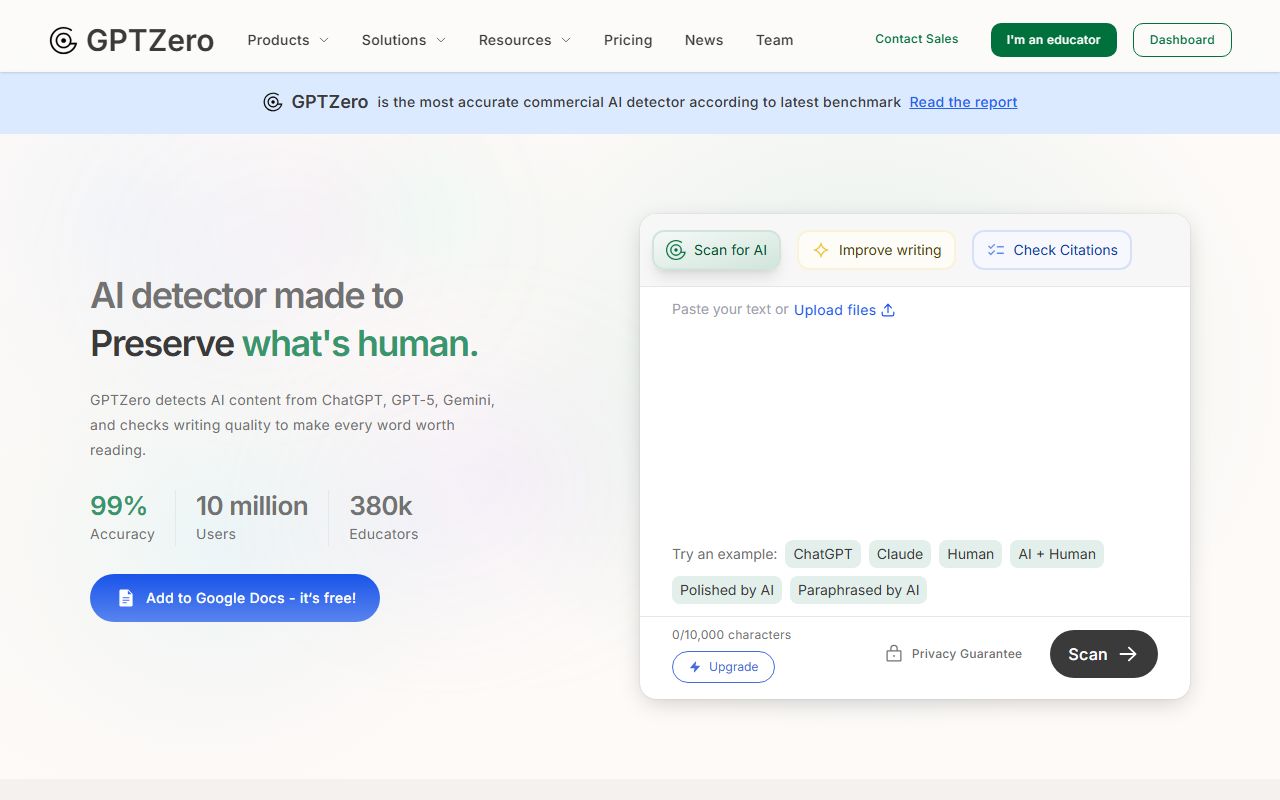
GPTZero was one of the earliest dedicated AI detectors and remains hugely popular, especially within the education sector. It distinguishes itself by focusing on foundational linguistic metrics: Perplexity and Burstiness. Its aim is to identify the predictable, often monotonous structure inherent in early AI models. With an accuracy tested around 97%, it is highly reliable for standard academic submissions like essays and reports.
The platform offers a generous free version and supports file uploads (Word, PDF), making it highly accessible to students and K-12 educators who need a straightforward, fast verification process. While it sometimes struggles with highly structured, factual human text (leading to occasional false positives), its intuitive interface and focus on the core metrics of human writing style make it an excellent educational tool. Check out the free checker at GPTZero.
Pros & Cons
Pros:
Free version is widely accessible and useful for students.
Focuses on understandable metrics (Perplexity and Burstiness).
Intuitive, clean interface designed for educational use.
Supports file uploads (PDF, DOCX).
Fast processing of results.
Cons:
Can produce a slightly higher false positive rate on formal, highly structured human essays.
Detection model is occasionally less sensitive to the latest LLM outputs (e.g., highly customized GPTs).
Paid plans are necessary for high-volume checks and advanced reporting.
Pricing
Free Plan: Yes, a robust free version is available for individual users, though it has upload and volume limits.
Paid Plan: Paid subscriptions start at $10/month, offering higher word counts, bulk uploads, and premium analytical features geared toward educators.
6. Proofademic AI
Best For: High-Stakes Academic and Formal Writing.
Proofademic AI is engineered specifically to tackle the most sophisticated forms of content fraud, particularly in high-stakes environments like research publications and formal thesis submissions. Its proprietary 'Paraphrase Shield' technology is designed to catch AI text that has been lightly edited or run through a basic paraphrasing tool, a common tactic used to bypass less robust detectors. Claiming a highly verified accuracy rate of 98%, it provides clear, detailed sentence-level analysis, giving instructors and editors definitive proof of originality concerns.
This detector provides robust reporting that goes beyond a simple percentage score, detailing linguistic anomalies indicative of machine generation. While it may be less versatile for casual marketing content, its precision in formal and technical documents is unmatched. Proofademic AI provides the assurance needed when academic integrity is on the line, ensuring that research and scholarly work are verifiably human-authored.
Pros & Cons
Pros:
Proprietary 'Paraphrase Shield' targets lightly rephrased AI content.
Very high verified accuracy for academic texts.
Provides clear, detailed reporting for administrative use.
Excellent at detecting complex structural AI patterns.
Specifically engineered for minimal false positives in formal writing.
Cons:
Limited appeal outside of academic and scientific circles.
Free checks are very limited, encouraging immediate paid subscription.
Pricing structure can be prohibitive for individual student use.
Pricing
Free Plan: Limited free checks are available, primarily for testing platform functionality.
Paid Plan: Subscriptions start at $15/month, geared towards individual researchers or small editorial teams requiring high-stakes verification.
7. Walter Writes AI Detector
Best For: Writers and Professionals Needing Detection and Instant Humanization/Rewriting.
Walter Writes AI Detector offers one of the most streamlined solutions for the modern content creator, combining high-accuracy detection (99% in internal testing) with immediate content remediation. Its main selling point is its incredible speed: users can scan documents up to 1,500 words in under three seconds. This instantaneous feedback loop makes it highly efficient for iterative drafting and editing processes where time is crucial.
Like GPT0, Walter Writes integrates a powerful humanization feature directly into the dashboard. If the detection flags content, the user can immediately rewrite the text within the same interface to boost the human score, ensuring the output is ready for publication without switching tools. The focus is clearly on the professional writer who needs rapid assurance and the ability to fix problems instantly. Check out Walter Writes AI Detector.
Pros & Cons
Pros:
High accuracy (99%) with proven minimal false positives.
Extremely fast processing speed (under 3 seconds for large texts).
Effective combination of detection and instant humanization/rewriting.
Intuitive interface designed for high-volume professional use.
Reliable performance across various AI models.
Cons:
Requires a paid plan starting at $9.99/month, no substantial free tier.
The platform’s origin focuses heavily on content creation, which might skew its objectivity in user perception.
Integration options with external platforms are limited compared to academic tools.
Pricing
Free Plan: No substantial free tier; users must subscribe to utilize the detection and humanization features.
Paid Plan: Subscriptions start from $9.99/month, offering generous word credits for detection and rewriting.
8. Turnitin AI Detection
Best For: The Global Standard for University Coursework and Dissertations.
Turnitin is the undisputed heavyweight champion in the higher education sector. While traditionally known for plagiarism detection, its integrated AI detection feature is now standard in its originality reports. With an accuracy rate around 95% in testing, it serves as the necessary compliance tool for millions of students worldwide. Its primary strength lies not in superior accuracy over specialized tools, but in its ubiquity and institutional requirement. If a university uses Turnitin, that is the detection standard you must meet.
The tool provides an integrated originality report that shows the probability of AI usage alongside plagiarism matches, giving educators a single, comprehensive view of academic integrity risks. Access to Turnitin AI Detection is typically provided by the institution, meaning individual users cannot subscribe directly. The key challenge remains the false positive risk, especially on highly structured human writing, leading to ongoing discussions about proper grading protocols.
Pros & Cons
Pros:
The mandatory, globally recognized standard for university compliance.
Integrated into existing institutional plagiarism reports.
Provides a single, non-optional originality metric for coursework.
Continuous updates based on feedback from the academic community.
Necessary for all students submitting official dissertations or papers.
Cons:
Access is strictly limited to affiliated institutions.
Can sometimes flag highly structured, technical human writing.
Lacks the integrated rewriting/humanizing features of commercial competitors.
The score is often perceived as a pass/fail metric, reducing student/instructor nuance.
Pricing
Free Plan: No individual or free access is available. Access is controlled and purchased by educational institutions.
Paid Plan: Institutional pricing only, requiring a direct quote based on enrollment size and required feature set.
9. Grammarly AI Checker
Best For: Everyday Writing, Quick Content Checks, and Integrated Grammar.
Grammarly’s AI Checker is a powerhouse of convenience, integrated directly into one of the world's most popular writing assistants. While its tested accuracy (91%) is lower than dedicated top-tier tools, its advantage is its seamless, real-time feedback loop. When you write or edit, Grammarly provides instant AI detection alongside grammar, style, and tone suggestions, making it ideal for everyday professional communication, emails, and short-form content.
The free basic version includes the AI detection feature, providing accessible verification for millions of users instantly. While not suitable for high-stakes academic submissions, it is incredibly useful for internal content teams who need fast assurance that their output doesn't sound overly robotic or formulaic. The ability to check originality without leaving the document you are working on is a massive time saver. Start using the Grammarly AI Checker.
Pros & Cons
Pros:
Seamless integration into the widely-used Grammarly editor.
Instant results displayed alongside other writing improvements.
Free basic detection available to all users.
Excellent for checking casual and professional communication.
Improves overall content quality beyond just AI detection.
Cons:
Lower accuracy rate (91%) compared to specialized tools.
Not reliable enough for academic or compliance-critical documents.
The full suite of features (tone detection, advanced style checks) requires a paid subscription.
Pricing
Free Plan: Yes, the free basic version includes the AI detection functionality.
Paid Plan: Premium subscriptions start around $12/month (billed annually), unlocking the full suite of grammar, style, tone, and compliance checks.
10. ZeroGPT
Best For: Budget-Friendly Option for Students and Independent Bloggers.

ZeroGPT is celebrated for its commitment to being a completely free, fast, and highly accessible AI detector. It requires no sign-up or account setup, allowing users to paste text and receive instant results. This makes it an ideal choice for students or independent bloggers working with limited budgets who need a quick, low-stakes check before publishing or submitting work. Its tested accuracy sits around 92%, which is respectable for a free tool.
The platform relies on analyzing core linguistic patterns to differentiate human from machine output. While effective for detecting raw, unedited AI content from standard models, it is known to produce more false positives on creative writing or highly stylized human text due to the lack of nuanced metrics used by premium models. Consequently, ZeroGPT should be used as a primary screening tool, not the final arbiter of authenticity.
Pros & Cons
Pros:
Completely free and requires absolutely no account creation.
Instant results and straightforward user interface.
Good for quick, low-stakes content checks.
Highly accessible tool for budget-conscious users.
Effective at catching basic, unedited AI output.
Cons:
Higher tendency toward false positives on complex human text.
Lacks advanced features like plagiarism checking or bulk scanning.
Accuracy (92%) trails the leading premium solutions.
Results often lack the granular sentence-level detail of paid platforms.
Pricing
Free Plan: Yes, the service is currently offered completely free with no account requirement.
Paid Plan: Not applicable; the service is entirely free.
11. Content at Scale AI Detector
Best For: SEO Blog Posts, Affiliate Content, and Marketing Audits.
Content at Scale built its detector specifically to vet the kind of long-form, keyword-heavy content often generated by AI for SEO purposes. While the tool is part of a larger content generation suite, its detector component is highly optimized for identifying formulaic writing patterns common in automated SEO drafts. With an accuracy of 92%, it specializes in flagging content that might be deemed "robotic" by Google's helpful content systems.
This detector is particularly useful for affiliate marketers and large blogs who need to rapidly check if their volume output retains a human-like flow and structure. The platform offers a basic free use option, making it an accessible screening tool for SEO managers. Its context-aware analysis means it performs better on marketing copy than generic academic essays, understanding the nuances of commercial, optimized text. Learn more about the Content at Scale AI Detector.
Pros & Cons
Pros:
Specifically optimized for long-form SEO and keyword-heavy content.
Effective at detecting content that reads as "formulaic" to search engines.
Free basic detection available for initial checks.
Strong integration with its own content optimization tools.
Useful for marketing audits and compliance checks.
Cons:
Accuracy (92%) is lower than academic-focused tools.
Full feature access requires commitment to the expensive content generation suite.
Less effective on non-marketing or academic texts.
Pricing
Free Plan: Yes, offers a basic free use option for the detection tool.
Paid Plan: Full access to the detection tools is integrated into their content generation suite, starting at $39/month (billed annually).
12. Quetext
Best For: Integrated Plagiarism & AI Checks for Bloggers and Students.
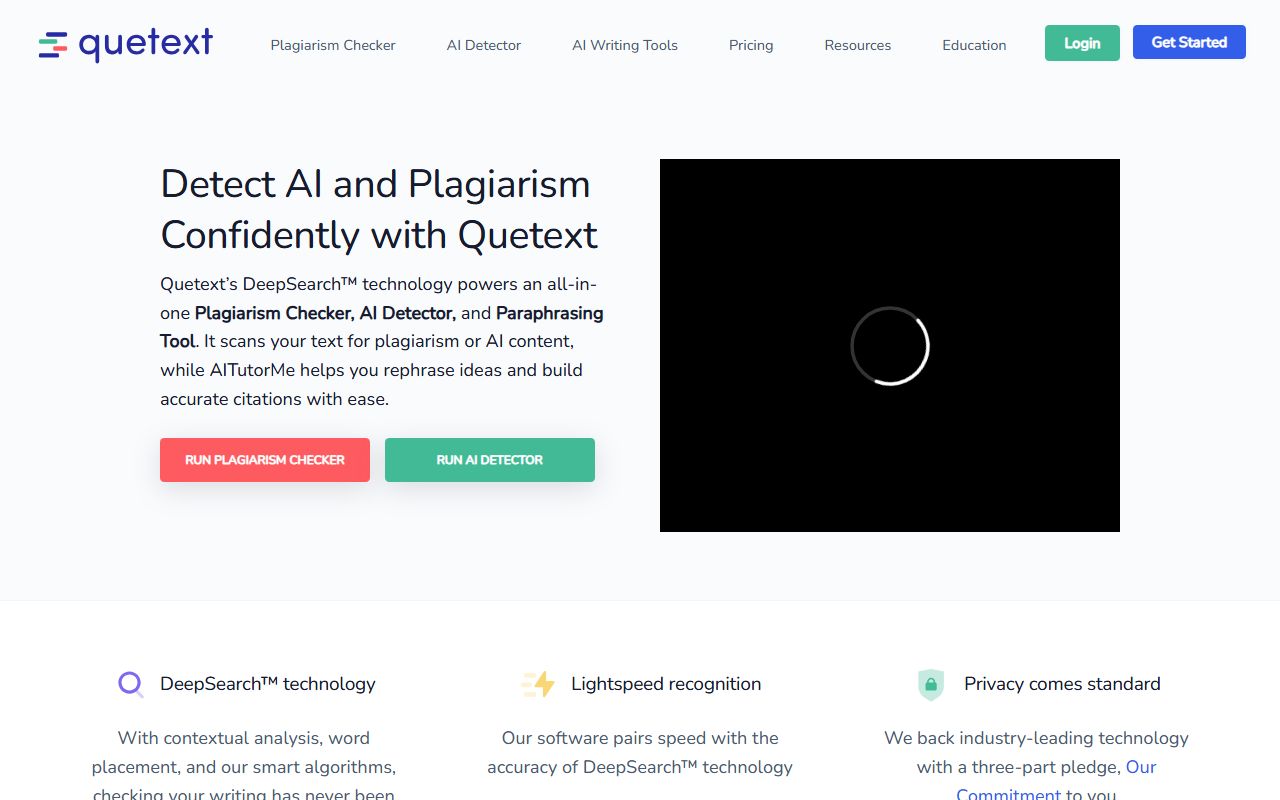
Quetext is primarily known for its comprehensive plagiarism detection, utilizing proprietary DeepSearch technology. Recognizing the shift in originality requirements, Quetext has effectively integrated AI detection capabilities, offering users a combined originality report. This unified approach makes it highly convenient for students and bloggers who need to simultaneously verify both duplication risks and AI usage.
The platform is budget-friendly, starting at a competitive monthly rate, making it accessible to individuals rather than solely focusing on institutional sales. While its core focus remains plagiarism, the added AI layer ensures users get a well-rounded assessment of content authenticity. The built-in citation tools further cement its usefulness for academic and editorial contexts. Check out Quetext.
Pros & Cons
Pros:
Excellent integration of plagiarism and AI detection in one report.
Highly competitive and budget-friendly starting price ($8.25/month).
Utilizes powerful DeepSearch technology for thorough comparison.
Includes built-in citation tools for academic use.
Good for high-volume content, not just short submissions.
Cons:
AI detection is often secondary to its core plagiarism focus, potentially leading to lower specific AI accuracy.
Limited free checks, requiring users to commit quickly.
Interface is geared more toward plagiarism reporting than nuanced AI feedback.
Pricing
Free Plan: Limited free checks are available, usually consisting of one or two short document scans.
Paid Plan: Subscriptions start at $8.25/month (billed annually), offering unlimited originality reports and expanded word count capacity.
13. Quillbot AI Checker
Best For: Identifying Lightly Paraphrased AI Text and Casual Use.
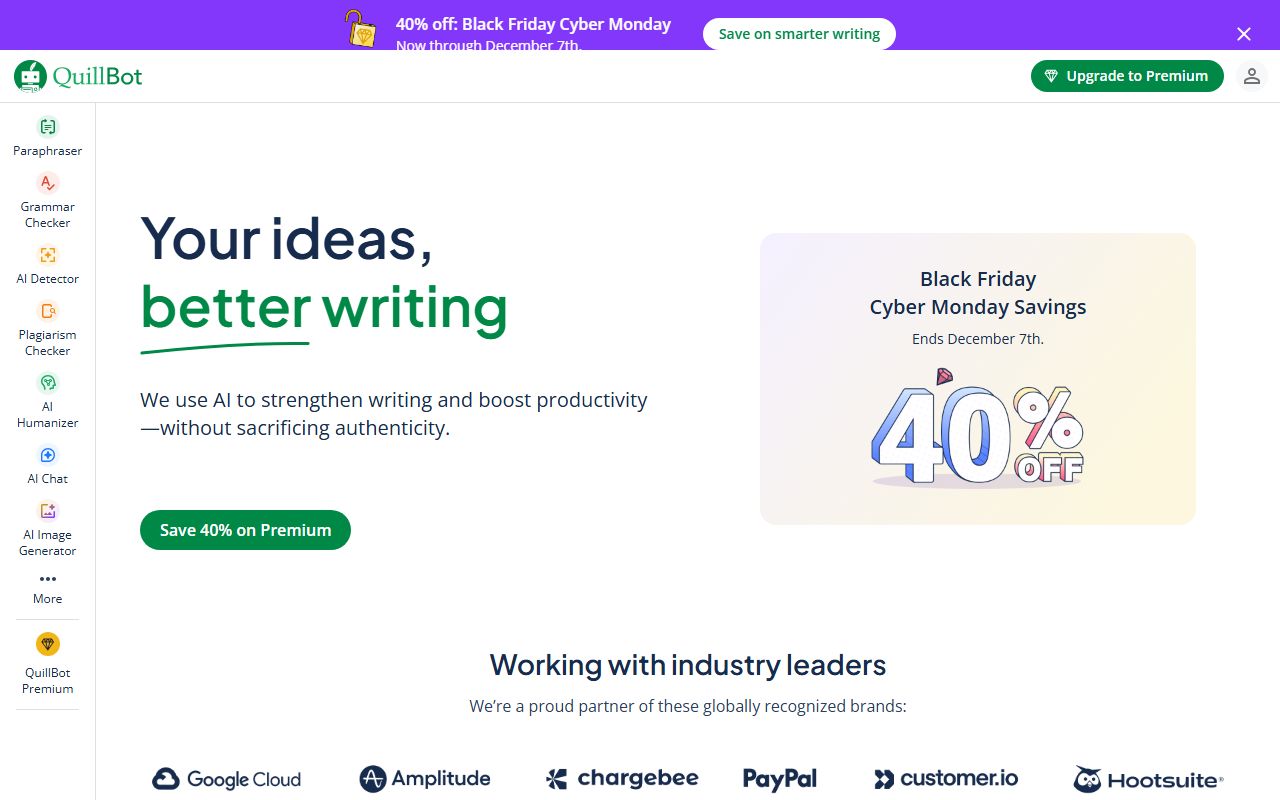
Quillbot is globally recognized for its powerful paraphrasing and summarizing tools. The inclusion of an AI checker leverages its massive database of text transformations, allowing it to specifically target and identify content that has been run through basic rephrasing engines, a common first step in trying to "humanize" AI drafts. With an accuracy around 90%, it sits on the lower end, but its free version and integration into the popular Quillbot ecosystem offer immense convenience.
This tool is best used by students or content creators who frequently use paraphrasers and need a quick validation check. While it shouldn't be relied upon for high-stakes verification, it serves as a valuable indicator of how effective simple paraphrasing techniques are against current detection models. See the Quillbot AI Checker.
Pros & Cons
Pros:
Free version is highly accessible and easy to use.
Excellent integration with the popular Quillbot paraphrasing suite.
Effective at flagging content that has only been lightly rephrased.
Ideal for quick, iterative checks during the drafting process.
Affordable premium subscription includes the full writing suite.
Cons:
Lowest accuracy score (90%) among the tools reviewed.
Paraphrasing alone is often insufficient to bypass sophisticated detectors.
Primarily aimed at casual use, not institutional compliance.
Feedback is less detailed than academic-focused tools.
Pricing
Free Plan: Yes, a free version is available and includes access to the AI Checker functionality.
Paid Plan: Premium subscriptions, offering unlimited paraphrasing and faster processing, start at $8.33/month (billed annually).
14. Writer.com AI Detector
Best For: Enterprise Content Teams and Brand Compliance Review.
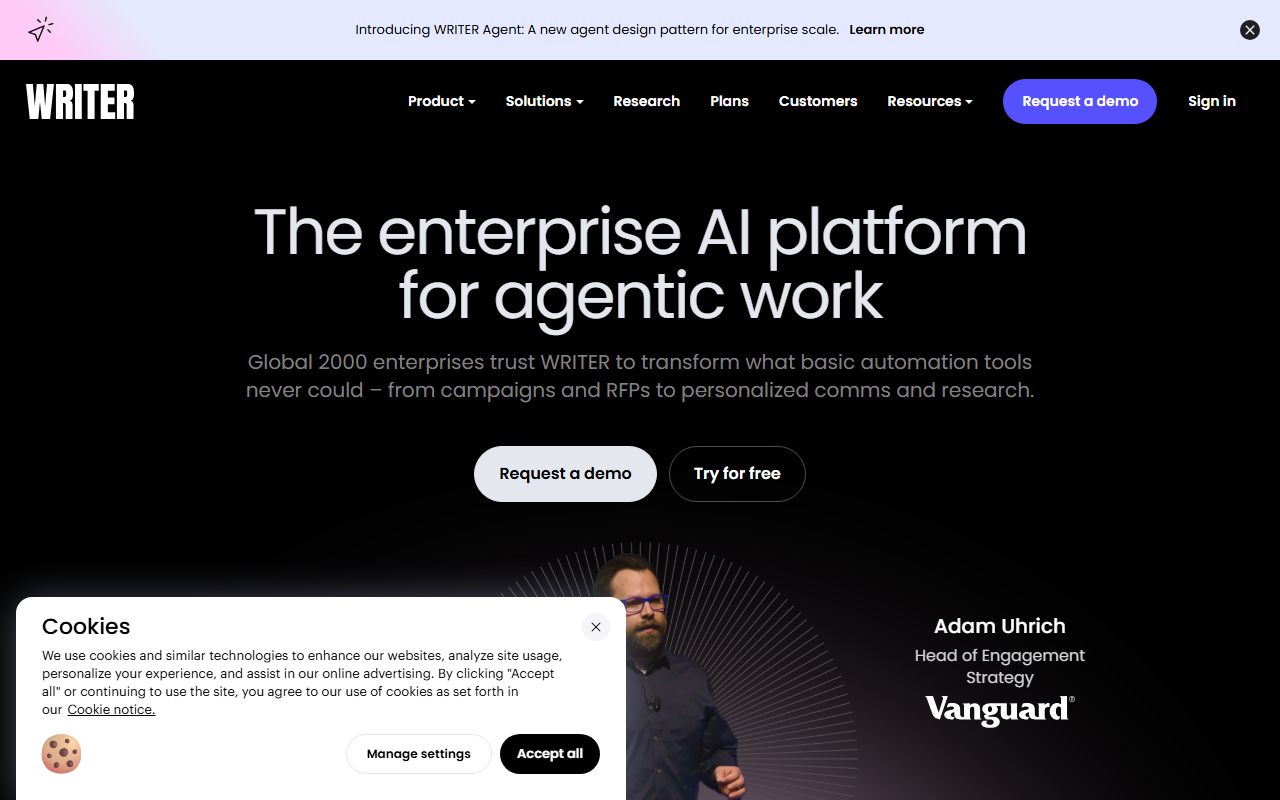
Writer.com provides an AI detection feature that is seamlessly integrated into its larger platform, which is dedicated to enforcing brand voice and compliance across large enterprise teams. With a tested accuracy of 93%, it focuses on verifying content intended for marketing, documentation, and external communications. Its strength lies in its ability to simultaneously check for AI usage while ensuring the text adheres to the company’s specific style guides, jargon, and tonal requirements.
The free detection tool is a great resource, but the full power of Writer.com is unlocked via its team plans, which offer features critical for large organizations: style guide enforcement, terminology management, and extensive collaboration tools. This makes it an invaluable asset for global businesses that must maintain consistency and verifiable human quality across diverse content streams.
Pros & Cons
Pros:
Excels at identifying AI in marketing copy and brand communications.
Integrated with brand voice and style guide enforcement tools.
Free detection tool available for basic verification.
Designed for collaborative use across large enterprise teams.
Effective at ensuring consistency and reducing content drift.
Cons:
Accuracy (93%) is modest compared to academic leaders.
Full feature set is costly, requiring an enterprise/team plan ($18/month minimum).
Less relevant for non-commercial or academic use cases.
Pricing
Free Plan: Yes, a basic, free detection tool is offered on the website for quick checks.
Paid Plan: The Team Plan, which includes the full suite of compliance and style tools, starts at $18/month per user. Enterprise pricing is available upon request.
15. Undetectable.ai Detector
Best For: Content Transformation Workflows and Pre-Rewrite Scans.
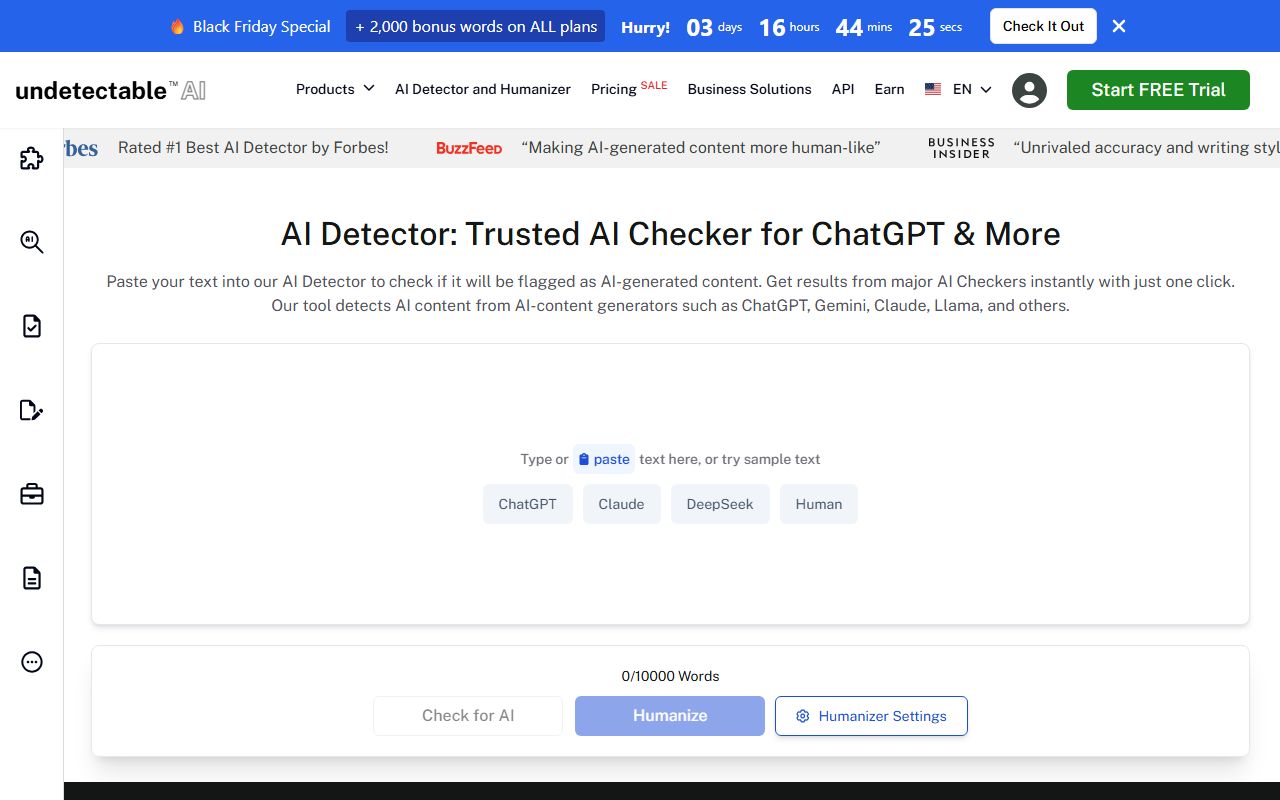
Undetectable.ai offers a specialized detector that is primarily used as the first step in a content transformation workflow. Its purpose is to check if AI-drafted content is currently detectable (91% accuracy) and, if so, guide users toward using its companion AI rewriting service, which focuses on increasing perplexity to bypass other checks. While its detection score is mid-range, its value lies in forming an efficient bridge between AI drafting and humanized publication.
The tool provides clear feedback on the likelihood of detection by popular third-party checkers. For content creators who regularly use AI drafting and rely on "humanization" to meet publication standards, the Undetectable.ai Detector is a crucial diagnostic step to ensure their final text is publishable and safe from flagging.
Pros & Cons
Pros:
Crucial for workflows involving pre-check scanning and transformation.
Fast processing and clear results.
Integrated workflow with its own successful rewriting service.
Effective for identifying basic AI markers that need correction.
User interface is simple and focused.
Cons:
Mid-range accuracy (91%), not a top-tier detection solution.
Requires a paid subscription starting at $15/month.
Its primary goal is to promote its humanization service.
Does not include plagiarism checking.
Pricing
Free Plan: No, there is no free access available; the tool operates on a subscription or credit basis.
Paid Plan: Paid subscriptions start at $15/month, providing a set credit allowance for detection and rewriting services.
16. AI Code Checker
Best For: Developers, Engineering Teams, and Code Integrity Verification.
As AI tools like GitHub Copilot and ChatGPT become integrated into software development, the need to verify code origin is rapidly growing. The AI Code Checker specializes in detecting code snippets generated by large language models. It analyzes patterns, indentation predictability, and comment structures that are highly characteristic of AI-generated programming, supporting languages like Python, JavaScript, and C++.
This tool is vital for organizations concerned with intellectual property rights and security vulnerabilities often introduced by AI-generated code. Its focus on non-textual data distinguishes it from general content detectors, providing a crucial check for engineering teams and educational computer science departments. The platform typically uses machine learning trained on massive AI code repositories to identify specific machine fingerprints.
Pros & Cons
Pros:
Specialized focus on detecting AI-generated programming code.
Supports multiple popular coding languages.
Essential for IP protection and security audits in development.
Offers granular analysis of code structure and comments.
Fills a crucial gap not covered by standard text detectors.
Cons:
Only useful for coding; irrelevant for standard text content.
Can sometimes flag highly standardized or boilerplate code written by humans.
The market is still nascent, meaning accuracy figures are less established.
Pricing
Free Plan: Limited free checks are often available to sample the detection functionality.
Paid Plan: Subscriptions are typically tiered based on the volume of code scanned, starting around $19/month for individual developers or small teams.
17. Smodin AI Detection
Best For: Comprehensive Text Verification and Rewriting for Students and Researchers.
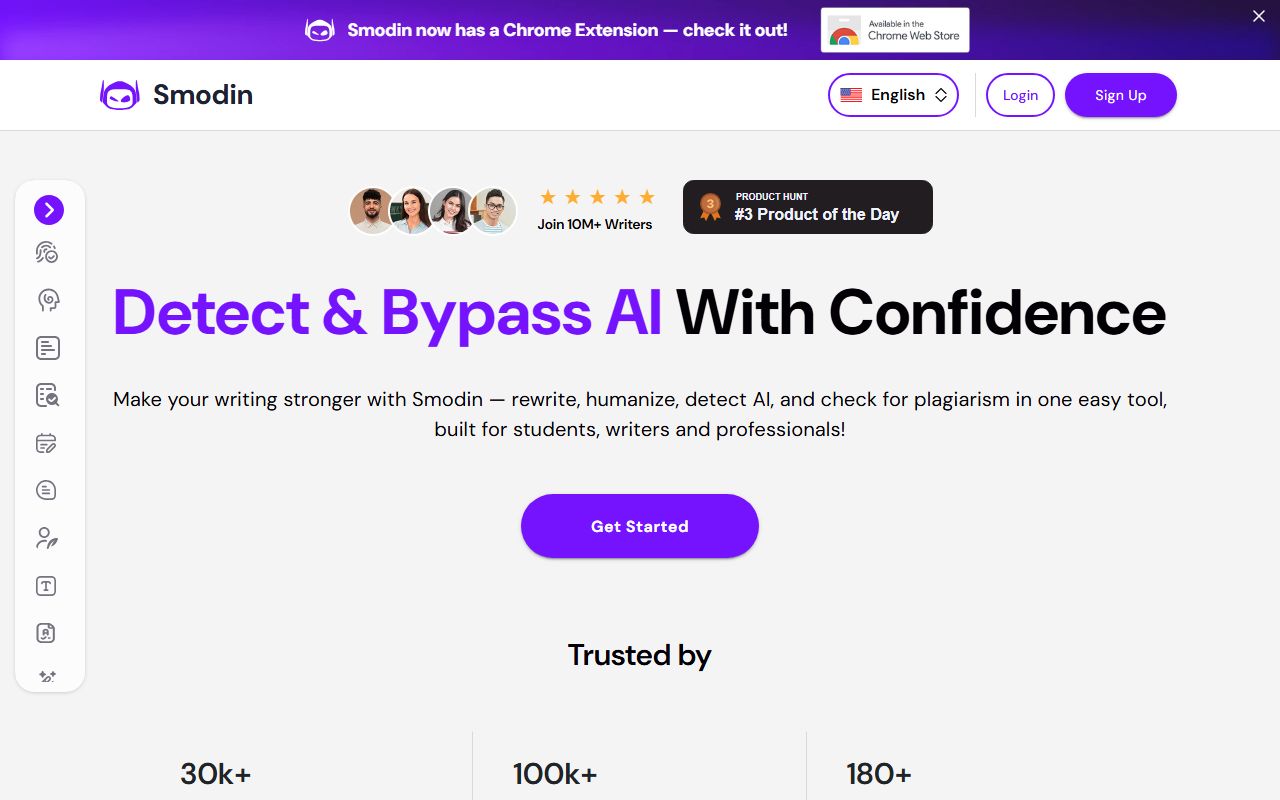
Smodin offers a comprehensive suite of writing tools, including an integrated AI detector that is particularly strong in verifying academic and research papers. Its detection engine works closely with its own rewriting and paraphrasing tools, offering users an immediate path to correction if content is flagged. Smodin's focus is on providing a full support system for students and non-native English speakers who rely on AI for initial drafting but need to ensure compliance.
With a high degree of sensitivity to nuanced language models, Smodin aims for high reliability in both detection and false-positive reduction. The accessibility of a free tier and a robust set of complementary writing tools makes Smodin AI a highly practical choice for individuals juggling multiple writing tasks that require originality assurance.
Pros & Cons
Pros:
Integrated with a powerful suite of writing and rewriting tools.
High sensitivity to complex academic language and structures.
Offers a usable free tier and affordable premium access.
Strong focus on supporting researchers and academic writers.
Provides multi-step suggestions for improving AI-flagged text.
Cons:
Accuracy metrics are competitive but not industry-leading (around 93-95%).
The interface can feel cluttered due to the density of features.
Rewriting suggestions are sometimes formulaic, requiring manual refinement.
Pricing
Free Plan: Yes, a generous free tier is available, usually limited by daily word count usage.
Paid Plan: Premium subscriptions, unlocking higher usage limits and advanced features, start affordably at $10/month.
18. Writefull AI Detector
Best For: Scientific and Technical Documentation and Institutional Research.
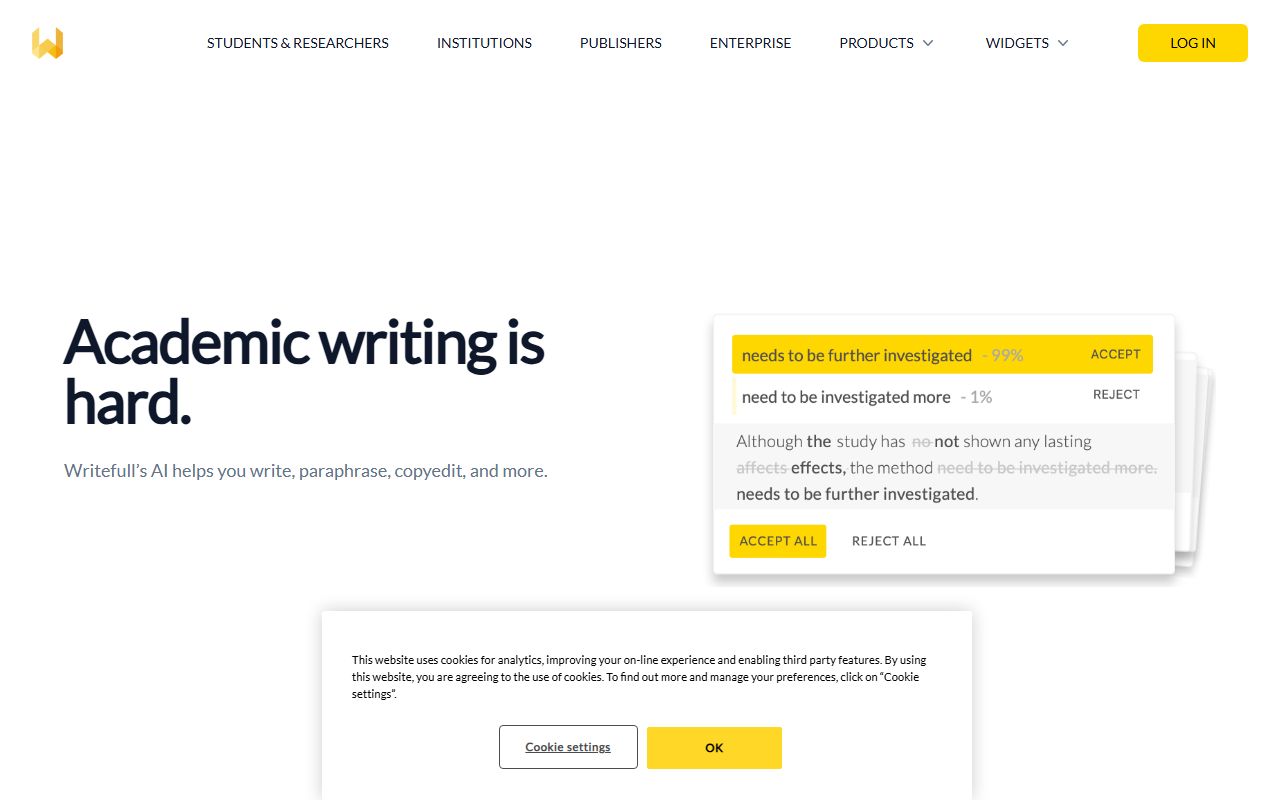
Writefull is a specialized writing tool designed for academic and scientific writers, primarily focusing on language enhancement and technical accuracy in papers, dissertations, and grants. Its integrated AI detector is highly tuned to the language patterns prevalent in scientific literature, where clarity and conciseness often mimic the predictability of machine generation. Writefull ensures that text adheres to academic standards while verifying that it maintains authentic human authorship.
Used by researchers globally, Writefull often integrates directly into common academic environments like LaTeX and Microsoft Word. Its AI detection minimizes false positives on highly technical or jargon-heavy content, a significant advantage over general detectors. Writefull AI Detector is essential for anyone submitting work to peer-reviewed journals or grant proposals where precision and originality are paramount.
Pros & Cons
Pros:
Specialized model tuned for scientific and technical language.
Excellent integration into academic writing environments (LaTeX).
High precision, minimizing false positives on technical jargon.
Affordable pricing for individual researchers and students.
Combined with powerful language editing tools specific to science.
Cons:
Accuracy rate can decline when used for casual or marketing content.
Limited free checks; requires commitment for ongoing research projects.
Less well-known outside of the academic and research communities.
Pricing
Free Plan: Limited free checks are available, often through a browser extension or introductory trial.
Paid Plan: Premium subscriptions, offering full detection and advanced language checking, start around $7/month.
19. Content Forge AI
Best For: Deepfake Text and Multi-Media Transcript Verification.
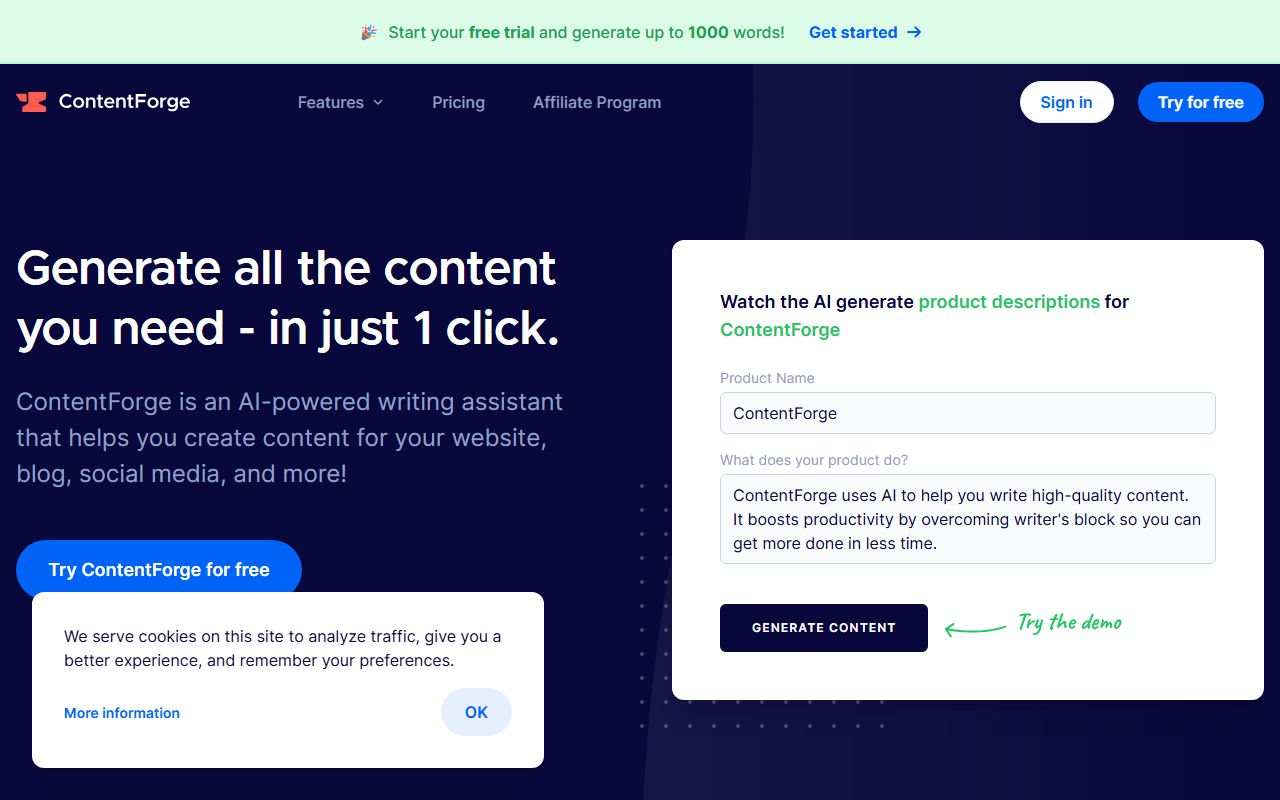
Content Forge AI represents the cutting edge of detection, focusing not just on simple text input but on verifying the authenticity of content derived from multi-modal sources, such as video transcripts, interview summaries, and deepfake text generation. This tool is crucial for news organizations, legal teams, and compliance officers who need to verify the source integrity of textual evidence that may have been generated or manipulated by advanced AI.
By analyzing temporal and structural inconsistencies common in AI-generated transcripts, Content Forge AI offers a level of verification that goes beyond standard linguistic metrics. Its high-cost structure reflects its niche, high-stakes focus, often serving enterprise clients and government agencies where the financial or legal risks of misidentification are immense.
Pros & Cons
Pros:
Specializes in deepfake text and multi-media (transcript) verification.
Crucial for high-stakes legal, journalistic, and compliance uses.
Addresses the emerging risk of AI-manipulated evidence.
Analyzes structural inconsistencies unique to synthesized text.
Cons:
High enterprise pricing ($49/month minimum).
Overkill for standard content marketing or academic essays.
Relatively niche focus limits general applicability.
Requires extensive knowledge to interpret complex reports.
Pricing
Free Plan: No free plan is available due to the high-stakes and specialized nature of the service.
Paid Plan: Pricing is structured for enterprise use, starting from $49/month and scaling significantly based on verification volume and access requirements.
20. Unicheck AI
Best For: Institutional Compliance (Alternative to Turnitin).
Unicheck is a major competitor in the institutional originality market, providing a highly reliable AI detection module integrated with its established plagiarism checker. Often used by universities and schools as an alternative to Turnitin, Unicheck offers similar deep integration with Learning Management Systems (LMS) and comprehensive originality reports. Its AI detection accuracy is competitive, often scoring in the 94-96% range.
The platform distinguishes itself with a clean, user-friendly interface for both instructors and students, providing transparent reports that make it easy to understand the percentage of flagged AI text versus plagiarized content. Unicheck AI is favored by institutions looking for a customizable, modern, and reliable solution for managing high volumes of academic submissions.
Pros & Cons
Pros:
Strong integration capabilities with diverse LMS platforms.
Reliable alternative to Turnitin for institutional compliance.
Clean and user-friendly interface for both students and instructors.
Provides comprehensive, unified originality reports.
Competitive accuracy (94-96%) on academic text.
Cons:
Access is typically restricted to institutional clients.
Lacks the brand recognition and global footprint of Turnitin.
Individual access is usually not permitted, limiting private use.
Pricing
Free Plan: No individual or free access is available. Access is restricted to institutional clients via LMS integration.
Paid Plan: Institutional Pricing only. Requires a direct consultation and quote based on the size of the student body and usage frequency.
The Evolution of Authenticity: Detection vs. Humanization
The current era of AI content detection is defined by a philosophical conflict: the need to detect AI-generated content versus the acknowledgment that AI is now an integrated drafting tool. For 2025, simply detecting the output is no longer enough. The market trend clearly favors solutions—like GPT0 and Walter Writes—that integrate "humanization" or rewriting capabilities directly into the workflow.
This feature is necessary because the most effective AI models (such as GPT-4 Turbo and Gemini Advanced) produce text so sophisticated that the linguistic markers of "predictability" or "low burstiness" are easily minimized. Furthermore, the persistent issue of false positives, where high-quality, structured human writing is mistakenly flagged as AI, necessitates a tool that can analyze the structure and suggest human-friendly edits. Integrated humanizers allow users to responsibly leverage AI for speed while ensuring the final, published content carries the unique stylistic complexity and authentic voice that search engines and high-stakes reviewers demand.
For SEO publishers, this transformation is crucial. Google’s algorithms are not penalizing content merely because it was touched by AI; they are penalizing content that is formulaic, unhelpful, and lacks genuine expertise or experience. Therefore, AI detectors serve as necessary quality control gates, and humanization tools are the necessary bridges to cross those gates successfully, transforming a machine draft into a "people-first" publication.
Frequently Asked Questions (FAQ)
Q1: How accurate are AI content detectors in 2025?
A: Top AI detectors, such as Winston AI and GPT0, consistently score in the 96%-99% accuracy range when testing raw, untreated AI-generated content. However, accuracy can drop significantly if the AI text is expertly paraphrased or run through a dedicated AI humanizer. This variation emphasizes the importance of using multi-metric analysis and looking beyond a single percentage score. The best tools are constantly updated to detect the latest LLM models.
Q2: What is a "false positive" and why should I care?
A: A false positive is when an AI detector incorrectly flags content written by a human as AI-generated. This is a significant issue, especially for students and professionals, as it can lead to accusations of plagiarism or originality violations. It typically occurs when human writing is highly structured, concise, technical, or uses formal, predictable language—characteristics that can mimic basic machine output. Choosing a tool with a documented low false-positive rate, particularly in your specific domain (academic, legal, or technical), is critical to avoid unnecessary disputes.
Q3: Do free AI detectors work as well as paid ones?
A: Free detectors like ZeroGPT or the basic versions of Grammarly are excellent for quick, low-stakes checks and initial screening. However, premium tools like Originality.AI and Winston AI often offer dramatically higher claimed accuracy, greater sensitivity to sophisticated LLM outputs, bulk scanning, API integrations, and integrated plagiarism checks that free tools usually lack. For compliance-critical tasks (academic submission, client SEO content), investing in a premium, verifiable detector is essential.
Q4: Can I bypass AI detection tools?
A: While no method is 100% foolproof, specialized AI humanizer tools (like those included in GPT0 and Walter Writes) are designed to restructure and rephrase AI content to increase its "perplexity" (randomness) and "burstiness" (sentence variation), making it significantly harder for standard detectors to flag the text as machine-generated. Ethical use of these tools is crucial; they should be used to polish and humanize content to maintain originality, not to pass off unedited AI drafts as human work.
Q5: Why is AI detection important for SEO publishers?
A: Google emphasizes "helpful, reliable, people-first content" and actively demotes content that appears to be written solely for search engines without genuine human value. AI detection is critical for SEO publishers to audit their inventory and ensure they are not penalized by Google's algorithms for publishing content that is formulaic, robotic, or lacks genuine human insight, which is often symptomatic of poor or unedited AI use. Detecting and improving such content is vital for long-term ranking stability.